BEFORE 1806
Tava / Sun Mountain
The Ute relationship with the mountain predates American exploration by generations.
COLORADO SPRINGS HISTORY
Tesla built lightning here. Elvira grew up here. Charlie Brown has Colorado Springs DNA. And that's barely scratching the surface.
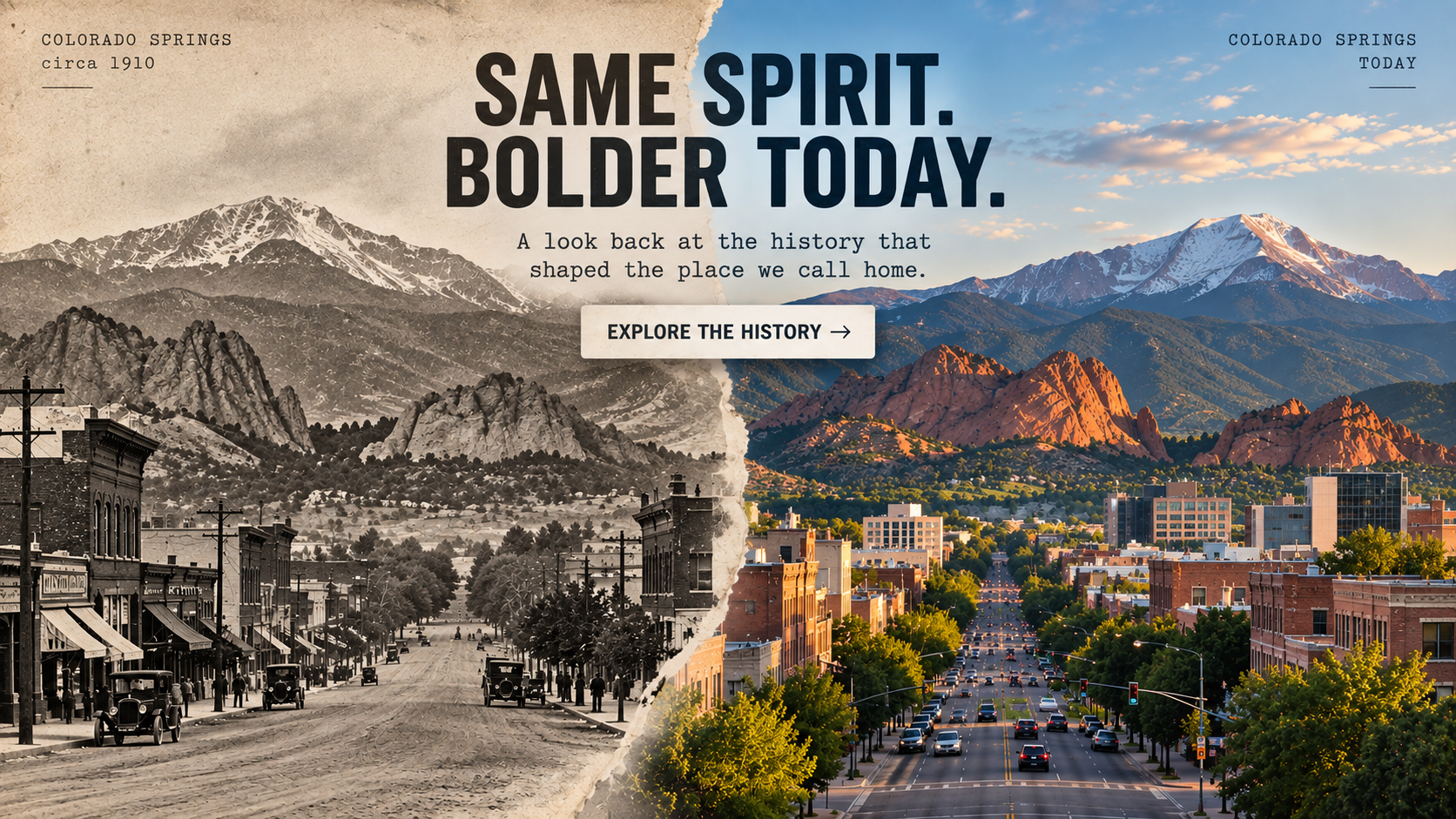
BEFORE COLORADO SPRINGS
Long before streets, railroads or a city called Colorado Springs, Indigenous peoples lived, hunted and traveled throughout this region. The Ute people have an especially deep connection to central Colorado and the mountain that dominates the landscape here.
BEFORE PIKE
The Ute people lived throughout the mountains of what is now Colorado long before American explorers arrived.
Pikes Peak held particular significance to the Ute. The name Tava, meaning roughly “Sun”, is associated with the mountain, and the Tabeguache band of Utes has been described as the “People of Sun Mountain.”
So while most of us grew up calling it Pikes Peak, the mountain's human history stretches back far beyond Zebulon Pike.
The mountain had a history, a name and meaning long before it appeared on an American map.
SO WHY DO WE CALL IT PIKES PEAK?
And yes — the guy it's named after never actually made it to the summit.
The Ute relationship with the mountain predates American exploration by generations.
Lieutenant Zebulon Montgomery Pike encountered the mountain while leading a U.S. expedition through the region. His party attempted to climb it but turned back in harsh winter conditions. Pike never reached the summit.
Pike's name became attached to the mountain. During the Colorado Gold Rush, “Pike's Peak or Bust” became one of the defining slogans of westward migration.
Federal geographic naming conventions generally avoided possessive apostrophes. Over time, “Pike's Peak” became the official Pikes Peak we use today.
1871
Colorado Springs was founded in 1871 by Civil War veteran and railroad developer William Jackson Palmer.
Unlike many western towns, Colorado Springs wasn't created because somebody found gold underneath it. Palmer envisioned a planned community that could attract residents and visitors with scenery, climate, rail access and nearby mineral springs.
Railroads, tourism, gold money from nearby mining districts, health seekers and eventually the military all helped shape the city that grew from Palmer's original idea.
WAIT... THAT HAPPENED HERE?
These are the stories I like — the ones that make you look at a familiar place a little differently.
Tesla came to Colorado Springs in 1899 and built an experimental laboratory east of town to study high-voltage electricity and wireless power.
His enormous electrical experiments produced artificial lightning — and one experiment overloaded the local power system and knocked out electricity in Colorado Springs.
Before Cassandra Peterson became Elvira, Mistress of the Dark, she grew up right here in Colorado Springs.
She attended local schools and graduated from Palmer High before eventually becoming one of the most recognizable characters in American pop culture.
Peanuts creator Charles Schulz lived in Colorado Springs during the early years of the comic strip.
He drew Peanuts here, met people whose names and surroundings influenced the strip, and even painted Charlie Brown and Snoopy directly onto a wall in his daughter's bedroom.
WANT TO GO DOWN THE RABBIT HOLE?
Historic maps, mining records, old property information, city archives and other Colorado Springs research tools are over in the Resource Guide.
Explore Historical Resources →